E-learning has become one of the most potent ways of learning in this era. The prime reason for that was the emergence of COVID-19.
How to Market Your E-Learning Course
The pandemic brought a sudden strike in demand for online courses.
Indeed, online courses also existed earlier, but the demand was deficient. With the growing seriousness of the pandemic, the demand for e-learning automatically took a steep rise with the evolving spread of the deadly virus.
E-learning is nothing but sessions taken by tutors online. The main aim of introducing this learning genre is to provide learners with ease. It is similar to a regular online class but through the online mode, which means the students do not need to be available in the class to study.
There are several reasons e-learning courses have taken a steep rise, like unavailability of potential tutors offline, high fees for the introductory courses, lack of excellence in the faculties, a distance from the institution, etc. These are the few most common reasons students enroll in online courses. The factors above stand canceled when taking e-learning courses because these are accessible and much more affordable than offline courses. The cost of traveling also stands canceled when learning online.
With the enhancement in technology, the education industry is penetrating, too, making it much more convenient and accessible for students to learn. Forecasts published at the start of the decade put the e-learning market well past USD 300 billion by the middle of it.
Many organizations are providing e-learning courses and becoming market leaders as well. The most crucial strategy these organizations use is to analyze the market’s needs and make a product available. If you also want to launch an online e-learning course, keep reading.
After the spread of the COVID-19 pandemic, people pretty well know that things are uncertain, and they may have to lock themselves up again at any time. Because of the casualties, the students compromised learning through standard learning platforms, but with the advancement in the processes, the students are seeking practical and permanent alternatives to learning online. Studying abroad costs a student somewhere between $25,000 and $35,000 on average, while the same course, with much the same material, can be finished from home for a small fraction of that.
Except for this, E-learning is the newest and most innovative business idea from a business perspective. Also, the students can get massive access to scalability, which helps provide training. All the students can access and learn the same syllabus according to their convenience. From the perspective of environmental statistics, e-learning also helps in saving paper to a considerable extent when compared to traditional learning.
You may also find this useful, Pros and Cons of Social Media Marketing.
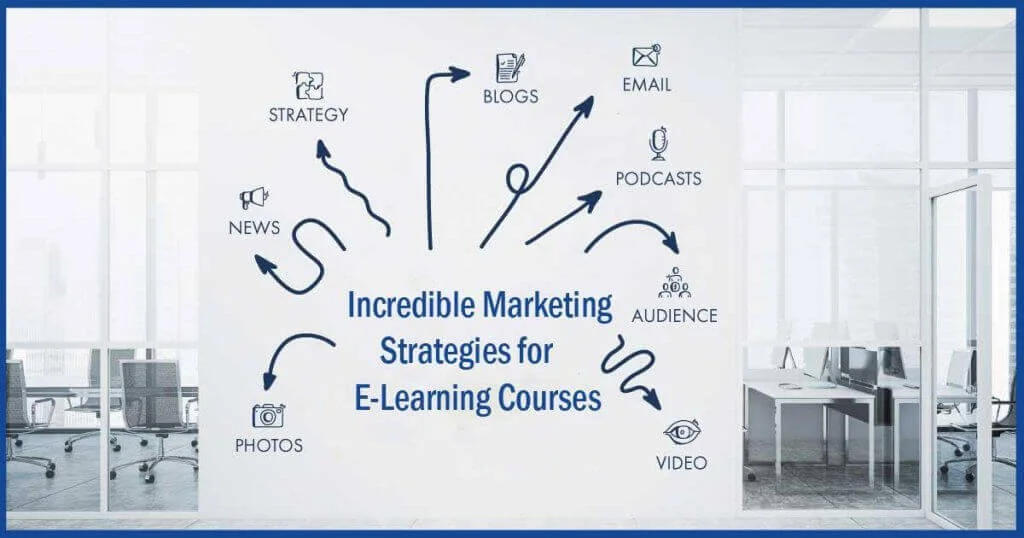
Effective marketing strategies to promote your e-learning course

1. Define a goal already
For any business willing to enter the market, it is essential to define its goals. These goals of the organization are going to be the backbone of the project. Setting and selecting those goals is a challenging task in itself, because the wrong goals can cost you dearly. The goals a company picks should support the implementation strategy and be SMART, which means specific, measurable, achievable, relevant, and time-bound. Some of the main aims you can set before the marketing strategies are what the students will accomplish from e-learning, when the course will be offered, who will enroll for studying the course, and how the learners can access the sessions.
2. Identification of the target audience
Different businesses have different targets based on their offerings. Understanding the customers is the first task to be done after the identification of goals. When you analyze your target audience, it can bring you closer to your aim. When offering e-learning modules and classes, it is essential to define the target audience. The most popularly evaluated audience of e-learning organizations is the working professionals seeking to take more advanced courses, the university students seeking to add value to their skills, etc. When an organization can analyze its target audience, it becomes much easier to customize the marketing strategies, as they are aware of the consumer’s expectations and can directly target them.
3. Maintain an excellent online presence
Today’s audience is online. People reach for a phone whenever they have a spare minute, which is precisely where an organization gets its chance to market a product effectively. Many social media platforms can help these organizations reach their potential audience. Many e-learning organizations use Google, Instagram, Facebook, YouTube, etc., to promote their products and capture the most potential customers. A business that builds a genuine online presence reaches far more of its potential audience, which is why social media works as a marketing tool for e-learning organizations.
4. Offer freebies
Nobody turns down a freebie. Getting more than you paid for is a pleasure every time, and it works as a strategy for e-learning organizations. They can offer great discounts on the certification courses or provide a free workshop to the students enrolling for their courses. When the students and the potential customers get to seek profitable learning, they are sure to enroll with you. You can offer various freebies as an e-learning business; what is crucial here is to analyze the right audience and provide the right offer with the right candidate.
5. Be a magnet for e-learning
You are probably wondering what I mean by a magnet here. When you need sportswear, which brand comes to mind first, Nike? And when you want a burger, McDonald’s, right? Indeed, this is what I meant by a magnet, which is the first name people think of when they have to buy something in a particular genre. There are indeed a lot of marketing techniques that you must use to become that, but if you apply the right ones, you will reach the widest audience you can.
6. Provide accurate and authentic information about your course
The best and most accurate way to market your e-learning courses is to provide authentic information about all your offerings. You must add enough accurate details about your courses and the tutors. Never focus on the product; instead, generate the best results by explaining the benefits of your offerings.
Final conclusions
Because e-learning is a vast industry, it is challenging for organizations to build a strong reputation. However, the more authentic a brand is, the more leads and customers it can attract. The strategies described above will help you reach your target audience and generate the best leads your organization can get.
FAQ
What is the first step you should take when marketing an e-learning course?
The first step is to clearly define your goal because having a specific, measurable, realistic and timely objective will guide your implementation strategy and help you avoid costly mistakes.
Why is identifying the target audience so important for your e-learning marketing strategy?
Identifying your target audience matters because it enables you to understand your learners’ expectations and customize your marketing so it resonates with them and improves the chances of success.
How does maintaining an excellent online presence benefit your course promotion efforts?
Maintaining an excellent online presence benefits your promotion efforts because the average person spends large amounts of time on mobile and social media which means effective online visibility helps you reach a potential audience more easily.
What kind of offer should you consider to attract more students to your course?
You should consider offering a freebie such as a workshop or a discount on the certification course because when prospects feel they get more value for less cost they are more likely to enrol.
Why is providing accurate and authentic information about your course vital for marketing success?
Providing accurate and authentic information about your course is vital because focusing on benefits and transparency builds trust with your audience, enhances your reputation and increases leads and customers.