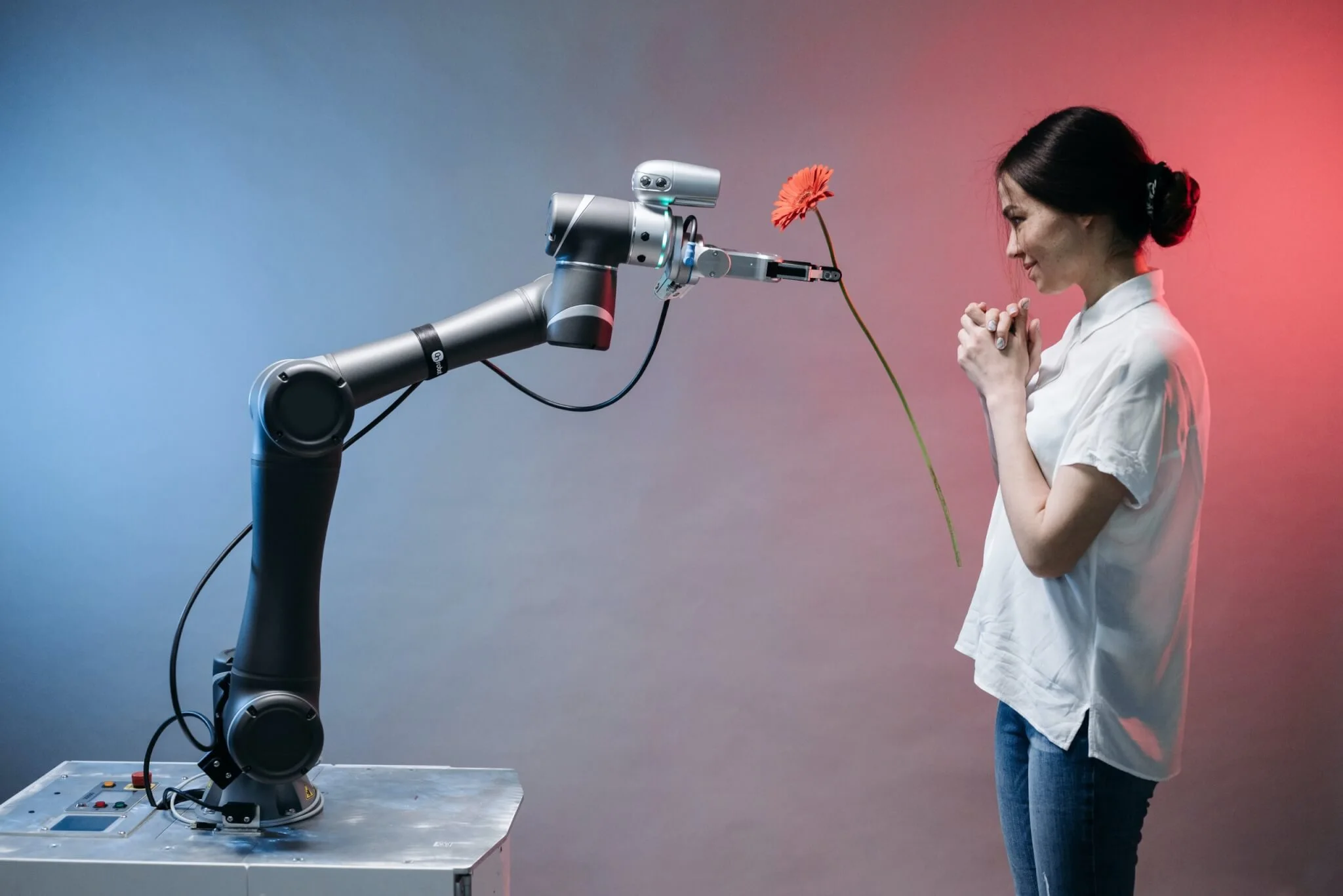
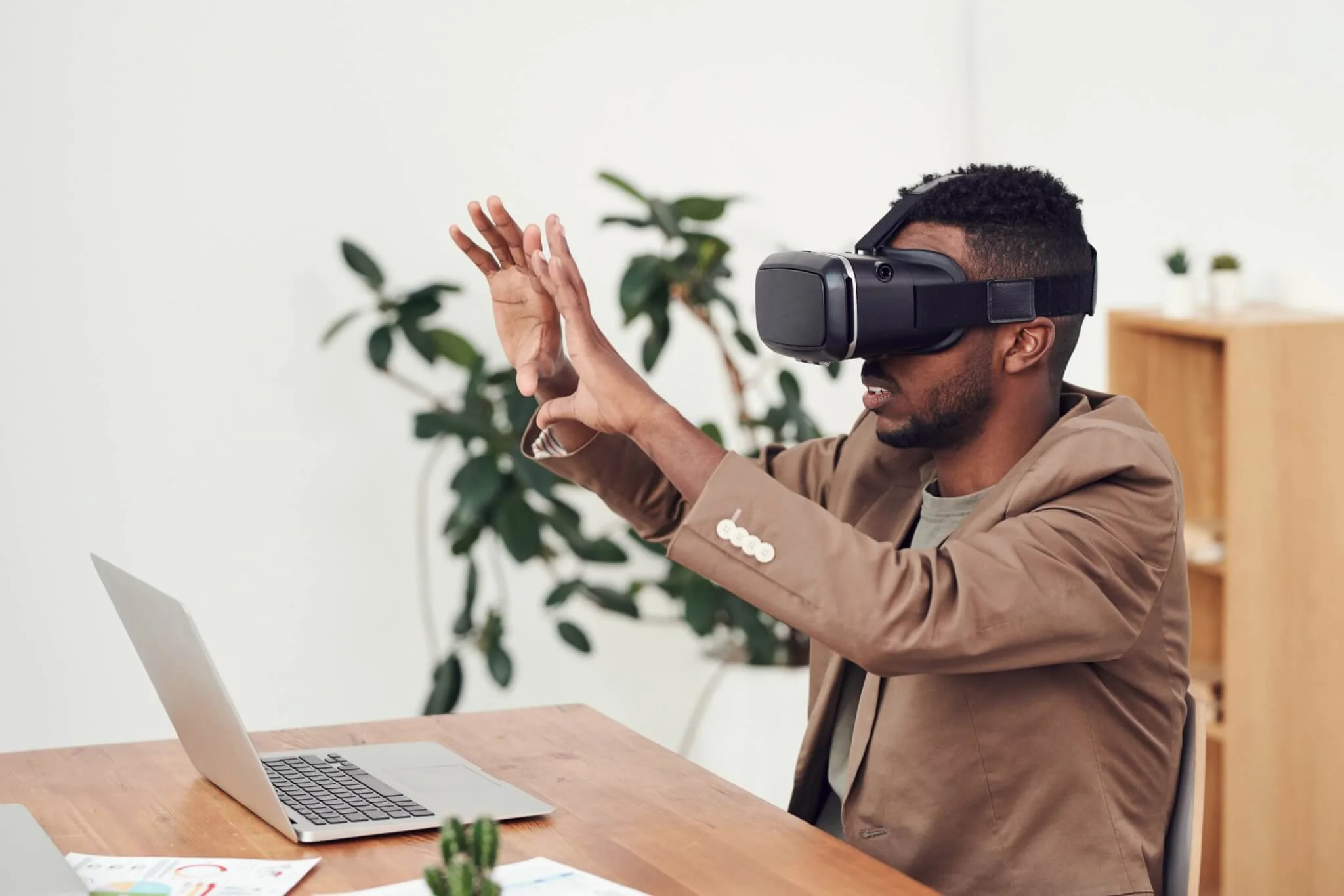
Today, few would doubt the power of virtual reality (VR) and augmented reality (AR) technologies.
VR and AR Technologies in Online Education
Indeed, online courses are already undergoing a transformation thanks to the potential offered by AR and VR. Both systems present unparalleled opportunities for educators to enhance online training courses.
Although people often think of VR and AR technologies in entertainment and gaming, they also offer a game-changing opportunity in online education. By offering their learners immersive, interactive, and realistic training experiences, educators can provide more compelling experiences. Moreover, they can go far beyond the limitations of technology-based learning methods, such as e-learning modules. Now used in various settings, from corporate onboarding to interview training, AR and VR technologies are revolutionizing how people engage with digital learning.
Let’s learn more about what makes AR and VR distinct from one another, how we can use them together, and the practical applications educators are already putting them into.
Using VR for online training
Because it provides a truly immersive environment, VR opens up new online training opportunities. Learners can perfect complex procedures without worrying about failures. Exploring concepts in three dimensions allows for hands-on learning that goes beyond theory. Furthermore, VR offers a controlled, virtual environment that educators can tweak. They might do so to increase the level of challenge, for instance, without compromising on the simulated conditions of the task. This form of experiential learning undoubtedly engages learners more fully, providing a more hands-on approach to knowledge acquisition, albeit a virtual one.
Using AR for online training
The truth is that AR provides learners with a similar experience to VR. Under online learning conditions, the main difference lies in the seamless blending of the real world with virtual elements. So, for example, VR might be the preferred technology to simulate a surgical procedure because it would likely take place in an operating theater. Meanwhile, you can use AR for training in real-world circumstances, such as responding to dangers that arise on the street. AR, in other words, tends to sit closer to the ground the learner actually stands on.
Read also: How to Create a Presentation Using Artificial Intelligence?
Combining VR and AR in online training courses
Creating online training courses with AR and VR can provide a comprehensive learning experience for everyone. If we’re talking about online courses, learners are typically remote and often at home. If so, they may only have access to one sort of technology. Educators who create online learning courses for people need to consider whether their content will suit AR users, VR users, or, ideally, both.
Guidance when creating online courses with AR and VR tech
Regardless of whether you are involved in virtual technology, creating an online course requires careful planning. Virtual learning needs that planning even more than the conventional kind. Here are some guiding principles that online educators should focus on.
Define educational goals
The first step is to define clear educational objectives from the course content. Learners typically want to know the overall scope and structure of the course, including how long it will last. Clearly outline the VR and AR capabilities participants will experience during the course. This is especially helpful for those new to this technology. Explain how the course’s virtual elements will help achieve the desired learning outcomes.
Make your training interactive
Interactive learning is often the best part of any lesson. It is a cornerstone of VR and AR technologies, so something you should leverage. Design course content that encourages active learner participation, including, for example, self-assessment. Offer an engaging and immersive learning experience that uses the stimulation capacities of AR and VR to the best effect. Progress from the theoretical to the practical stage as soon as possible.
Interesting to read: How Artificial Intelligence is Transforming the eLearning Industry
Offer clarity throughout
Given how advanced VR and AR technologies are today, providing clear instructions is crucial. Users need to understand the expectations set for them. For example, participants should comprehensively understand how many times they may attempt a procedure in the virtual realm without "failing." Equally, they should be able to navigate and interact with the course content without needing to depart from the online learning experience.
Prioritize addressing all participants’ accessibility issues
Always prioritize accessibility. It’s a fundamental consideration when designing online course content. This is true with AR and VR courses, too. Ensure that all learners have access to additional resources, for example, if they face any physical, sensory, or cognitive challenges that might hinder their use of virtual technologies.
Make use of real-world examples in the training
Real-world examples improve any online course, and they matter most in AR, where the learner is standing in the scenario as they work through it. The relevance of the material should be apparent without anybody having to explain it. AR and VR learners don’t want to acquire skills and knowledge they cannot use outside the virtual environment.
Test and evaluate your courses
Most modern educators know that testing and evaluating their courses is a recommended practice. Learner feedback matters here just as much as it does in any other course. Without such metrics, you cannot be sure your learners are meeting the defined educational objectives, nor can you compare your AR and VR courses to conventional ones. You should use your results to refine and update your course material.
How to apply AR and VR tech in training
There are numerous applications of AR and VR technologies in online training today. Here are some examples.
Simulations and remote learning
VR simulations give learners somewhere to hone a skill without risk, which is why airline pilots train that way. Meanwhile, AR can significantly enhance remote learning by using digital content blended into the learner’s physical environment to provide new and challenging scenarios.
Onboarding, skills acquisition, and shadowing
Undoubtedly, AR and VR technologies are transforming corporate learning. Numerous large companies now use them for onboarding without tying up other staff members. VR, in particular, facilitates high-quality shadowing experiences, allowing employees to observe experienced colleagues in action virtually. Meanwhile, AR can be useful for acquiring skills in the field, such as training on a building site.
Key takeaways on AR and VR in online education
As course creators shape the future of online education, a stronger focus on AR and VR learning will be crucial. As these technologies become common tools, educators who do not embrace them may fall behind. Virtual learning is not just a passing trend. It deserves serious attention. Teachers should explore how it is used today. To take full advantage of it, adapt your course materials without letting your usual standards slip.
FAQ
Why is it worth using VR and AR technologies in online education?
Most believe that VR and AR technologies are more related to the entertainment industry. However, they can be useful for learning. VR and AR technologies open up new opportunities and allow us to explore new online training opportunities without compromising reality. For example, VR might be the preferred technology to simulate surgical procedures because it would likely take place in an operating theater. Then, AR fits for training in real-world circumstances.
How are AR and VR different from each other?
VR offers a controlled, virtual environment that educators can tweak. The truth is that AR provides learners with a similar experience to VR. The main difference is that AR blends virtual elements into the real world, while VR replaces the real world entirely.
What makes VR and AR technologies different in online training?
Virtual Reality creates a fully controlled immersive environment while Augmented Reality seamlessly blends virtual elements into the real world and this key difference helps trainers choose the most appropriate technology for specific learning contexts.
Why is it beneficial to use VR for online training courses?
Using VR allows learners to practice complex procedures in a safe virtual setting without risk of failure and this hands-on engagement enhances their ability to apply knowledge rather than just absorb theory.
How can AR be applied effectively in online training courses?
AR is effective when training takes place in real world circumstances because it overlays virtual content onto the learner’s physical environment and this real-world integration makes the learning scenario more meaningful and relevant.
What guidance should educators follow when creating online courses with VR and AR technologies?
Educators should start by defining clear educational goals, then design interactive experiences, ensure accessibility for every learner, and test and evaluate the course so they can refine it.
What are practical applications of VR and AR in online training today?
Practical applications include simulations for high-risk tasks in remote learning, along with onboarding and skills acquisition in corporate settings. Combining AR and VR delivers a comprehensive experience whatever technology the learner has to hand.