

Gen Z was born with the internet and a smartphone within reach, and those devices shape how they live and how they learn. Schools and colleges have been building around that ever since.
What’s next in Gen Z e-learning?
They also give students a flexible platform to learn on, and new tools keep arriving that change how studying works. Remote learning, or in other words, distance learning, has overcome several hurdles of learning. It enables you to learn from any corner and at any time.
COVID-19 forced schools, colleges, organizations and businesses to close for a while, and the alternatives were found soon afterwards. Digital learning took hold, and firms moved to remote working to keep staff safe and comfortable at home. Working and learning with digital solutions is now the new normal for everyone. Webinars, recorded videos, and educational blogs are enhancing digital learning ways.
Earlier, these methods were adopted by remote working employees or people spread across geographical regions. These days it has been adopted by various firms, organizations, universities, and schools. Surveys from 2020 found a substantial minority working fully remotely, with a larger group splitting the week between home and the office.
Remote learning as a new trend
What started as a necessity has become a habit. Remote learning is now taken up worldwide, and it brings its own pace, its own flexibility and platforms anyone can reach. It brings out the whole world of possibility to learn. A remote learning environment teaches you to make your path.
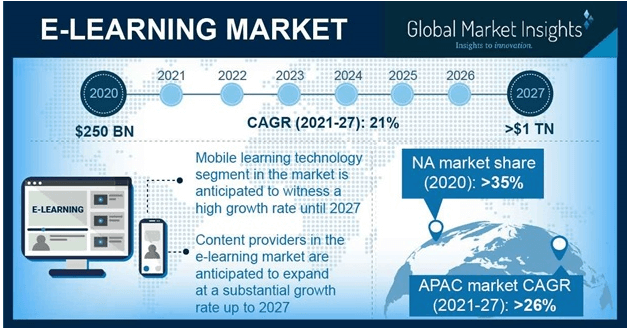
The e-learning market was worth roughly 250 billion dollars in 2020, and forecasts at the time had it compounding at around 21% a year through the decade. What follows are the trends that shaped remote learning as it grew.
Trends of remote learning
Educators point out that remote learning is traditional teaching delivered in a digital form. The content is the same as before, and only the channel has changed, from a physical classroom to interactive webinars and video meetings. Here are the trends that matter most.
Learning analytics is one of the relevant tech solutions for learners
Learning analytics is a justified sector in remote learning. It is a method that intends to collect the data and analysis of the student to know the improvements in learning results. Here, learning analytics combines big data with traditional methods of quantitatively drawing out the analysis of the student’s learning habits.
The educational organizations, schools, online academies use these to improve the teaching methods for the students. The teaching practices are optimized to the ways the students are learning. Further, this data will lead to the performance index of the students. It will allow the student’s e-learning methods to be effective. In the long run, it improves the student’s retention rates.
Overall, learning analytics will make e-learning effective by knowing how the students are learning and learning in the future. Also, learning analytics paves the way for educators to draw out the cost-effective method of teaching. It also shows which materials students actually turn to and which they find least helpful, so the money goes into improving the first and cutting the second.
Big data has revolutionized the way we used to look at information
Big data is the bunch of data that is collected while a learner is learning a course. The data includes the progressions, results in assessments, social interactions, skills development ability, all merged to form big data. Similarly, student data is gathered and analyzed this way.
Big data has enormous advantages for e-learning professionals. It provides them with the analytical results to know what the seekers are looking forward to. Educators can analyze which course the learners are giving their significant time to learn. It will help a professional to optimize the content to make it more relevant. E-learning is the trend and compulsion in these years. Big data is making it a relevant platform to learn now and in the future.
Blockchain has a significant impact on education and organizations
The records, or called here blocks, are joined together by the crypto technology making a blockchain. The blocks are securely linked with each other. Retention is a persistent problem in e-learning, and so is the shortage of middle ground between courses. A student who finishes a beginner course often finds nothing between that and an advanced one.
Blockchain-based platforms attack that from the incentive side, issuing verifiable rewards as learners progress, which gives them a reason to carry on to the next level. The same mechanism can reward educators for producing course material that people finish.
Blockchain is emerging in various fields. The future of blockchain in the education field is secured learning and incentive distribution. Remote learning is motivated a lot with this trend.
Microlearning is an asset for strong e-learning
Microlearning is given the spotlight in learning and training programs. It executes the learning process instant and to the point. Younger and older learners alike have little patience for wading through abundant material, especially when the part they need is buried in the part they do not. Remote learning has many issues in its methods of teaching; microlearning is resolving many problems.
Microlearning allows the learners to get the exact information and avoid unwanted data. Remote learning content is formed and delivered differently in the forms of websites, webinars, and videos, and this is how it makes the learning effective. The programs are divided into short forms, which helps to learn effectively. Further, microlearning allows the learners to relearn or test themselves in e-learning, making efficient learning.
Microlearning avoids all the reasons to disengage the learning process. Educators can create webinars that include factual data avoiding vague information. The trend keeps growing, and it makes remote learning more focused than it used to be.
Adaptive learning gives a personalized touch to remote learning
Adaptive learning is addressing the learning programs with a personal touch but in different manners. First, the individual’s learning methods, content, and resources are marked. The algorithms are set accordingly and analyze the learner’s behavior. It further gathers similar programs and suggests them to the learners. Moreover, adaptive learning marks the weakness of the learners. Accordingly, it suggests to them the content to improve.
A personalized touch enhances the e-learning and increases their retention in the program. Also, the methods trace the forgetting period for the learners. The algorithms remind the webinar topics that preserve learned concepts for longer. Companies are embracing adaptive learning for their employees, treating it as a necessity because it saves time and makes the learning stick.
Webinars remain the workhorse of remote learning
Learners are now well-versed in using webinars as a mode of learning method. These methods allow educators and learners to communicate from anywhere around the globe. Moreover, effective methods are making the webinars more engaging, retaining the huge learner’s count. These methods are inexpensive, providing enormous chances to learn remotely for anyone.
This method has become a trend during the pandemic phase in the world, and yet it is a trend. Enormous platforms are available that cater to every need of the educators to teach and learners to learn through webinars. Classrooms are no more missed due to these amazing platforms.
Remote learning has become a new norm and here to stay for a long
The generation growing up now has the best learning tools anyone has ever had, and better ways to build skills with them. What began as a trend turned into a necessity the moment institutions and organizations had to close their doors.
More educators now use technology to reach students at a distance, and businesses do the same to train their teams on a schedule that suits everyone.
FAQ
What makes remote learning a new norm rather than a temporary fix?
Remote learning has become the new norm because during the pandemic many schools, colleges and organizations switched to digital modes and found that learning from anywhere at any time is possible and effective.
How does learning analytics improve e-learning for students?
Learning analytics improves e-learning by collecting data about how a student learns, analysing that data, and then helping educators adjust the teaching methods so that learners get better results and stay engaged longer.
Why is microlearning becoming important in remote education?
Microlearning is becoming important because learners today often prefer short focused chunks of information instead of long sessions and this approach helps avoid overload, supports retention and fits remote learning settings well.
What role does adaptive learning play in online courses?
Adaptive learning plays a role in online courses by personalizing content and resources based on the learner’s behavior, identifying weak points and suggesting next steps, which makes learning more effective and efficient.
In what way are webinars still relevant in remote learning environments?
Webinars are still relevant because they allow educators and learners to connect from anywhere in the world, they offer interaction like live teaching, and they have become a cost-effective and widely used mode of remote learning.