Email campaigns serve as webinar invitations as well as sources of engagement and information about the upcoming event and the company as a whole.
Creative email campaign ideas
But what should a good email campaign look like? Interesting, original and consistent, you would say. It is all true, but most importantly, it must work and bring you clients. Here you can find 10 ideas for a creative and effective email campaign that will make your clients want to visit and pay for your webinar.
Effective email campaign ideas
Your email is more than just information. To be effective, it needs to focus on three key parts, which are the topic, the content, and the call to action.
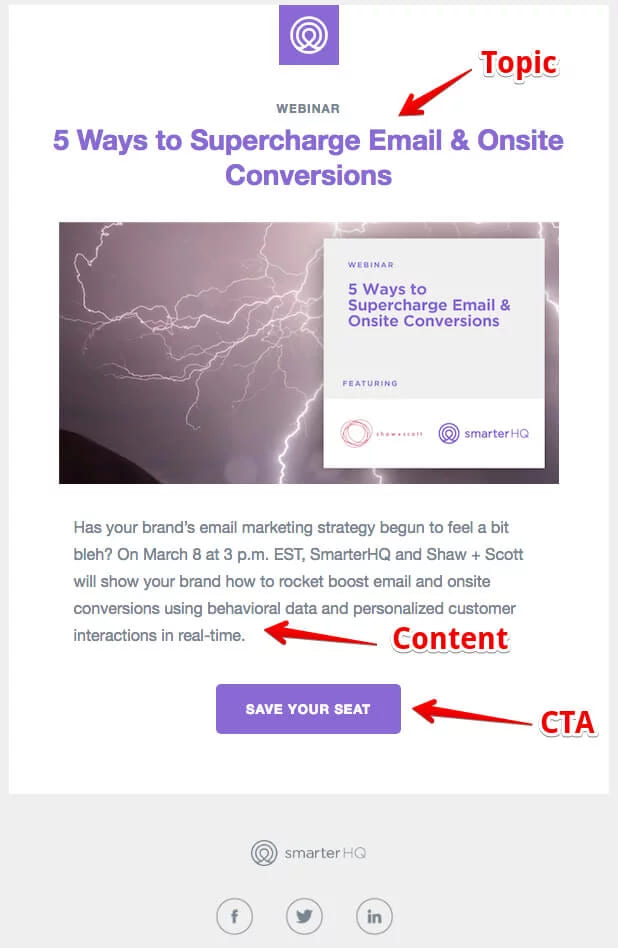
Topic. The topic should be laconic but eye-catching. Write down a couple of topic lines and choose the one that is most memorable and attention-grabbing. It is also a good idea to ask your friends and colleagues for opinions, as it can help you get a different perspective.
Content. Try to be concise and focus on the benefit your webinar will bring to the participants. You may add a pinch of humor here and there, but remember that the tone of voice should hinge upon your area of expertise and the target audience, rather than mood and personal preferences.
Call to action (CTA). This is the most important component of the whole email. A CTA is usually a button that leads to the registration page or straight to the webinar room, so make it the most visible and appealing thing on the page. Put one near the top and another in the middle, and work on the wording. Instead of a plain "Register", think up something more engaging, such as "Reserve a spot".
There is more on this in Why Isn’t CTA Working.
What information to include
In most cases, webinar hosts limit their email campaigns to sending reminders about upcoming events. And this is not bad per se. However, this does not allow your audience to get to know you better. Thus, they are less likely to visit the webinar and become your permanent clients. Here are some email ideas to add to your repertoire to help fix this problem.
Tell a business story
We’ve already covered storytelling during webinars. Now let’s focus on email marketing.
You probably already have an interesting story about starting your business, either on the website or just in your head. Whatever the case, hearing a business story helps people understand the person behind it; it puts a face on your business and adds to its personal appeal.
Do not play the salesman. Lay aside the boring product and service descriptions along with the price lists. Instead, talk about the stages of product or service development, the emergence of ideas and the obstacles on the way to success.
In addition to the personal story, you can paint a picture of your typical client. Who do you work for? What kind of person would be interested in your webinars?
To do this, launch a quick survey on your social networks. Here are the questions you may ask:
- How did you learn about the company/product/service?
- Why did you choose us?
- How did we help you?
You can then use the obtained information to create a compelling email campaign.
Add a personal touch
Nobody likes dealing with faceless corporations. If you want to establish a trusting relationship with your clients, do not hesitate to show yourself, your colleagues and partners. Attach photos to the email. The more sincere and open you are, the more readily people will take you up on your offer.
Share concerns
Amidst the never-ending stories of success, it is refreshing to encounter an honest account of failure or mishap. However, while sharing your concerns, do not forget that your goal is still to sell a product or service. So you need to tie your misfortunes to something positive, such as mentioning that you’ve got an empty warehouse because of how successful the recent sale turned out to be. Sprinkle some exciting details on top, and you’ve got yourself a new client for your online shop, course or webinar.
Do some gift-giving
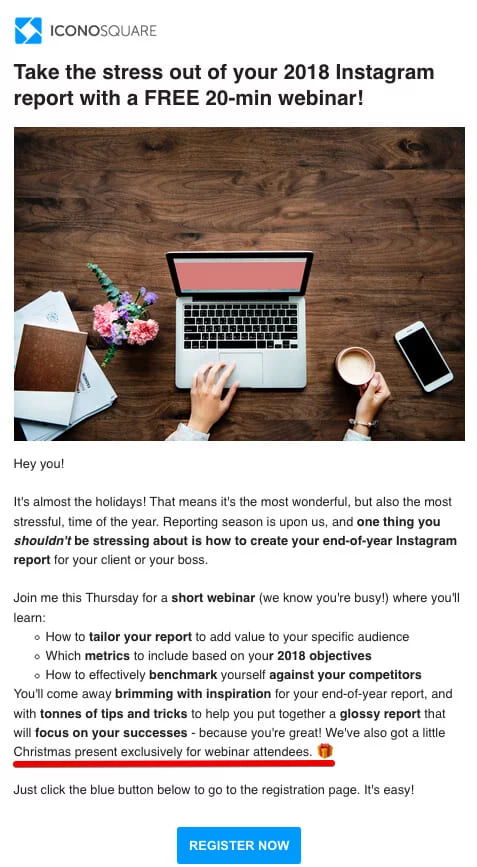
Shift focus from yourself to your clients. Show them you care by providing different free perks such as a free book, podcast, webinar, trial lessons.
Collect case studies
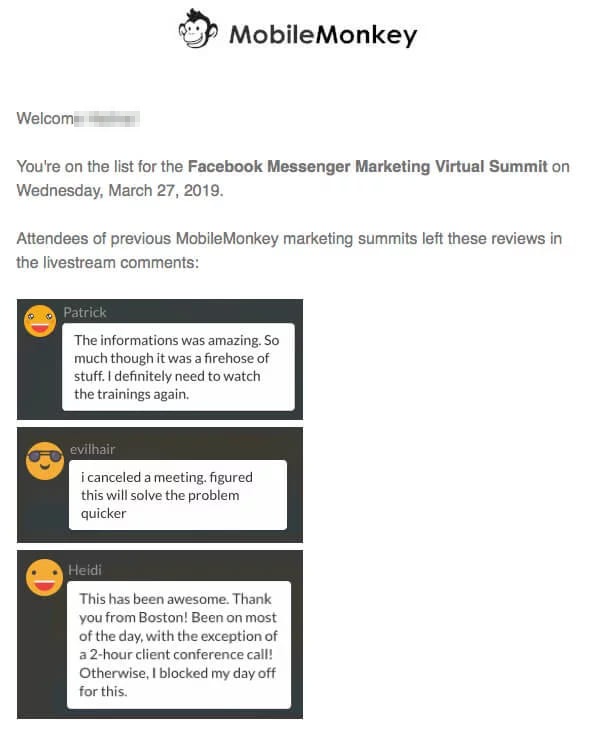
Ask clients to share their experience with your product or service via personal email or social networks. You may even launch a competition for the best story with one of your products/services as a prize. Make sure to contact the winner before publishing their story on your social channels, because they may be private people, unwilling to have their identity exposed to the world.
Exploit the "last chance" appeal
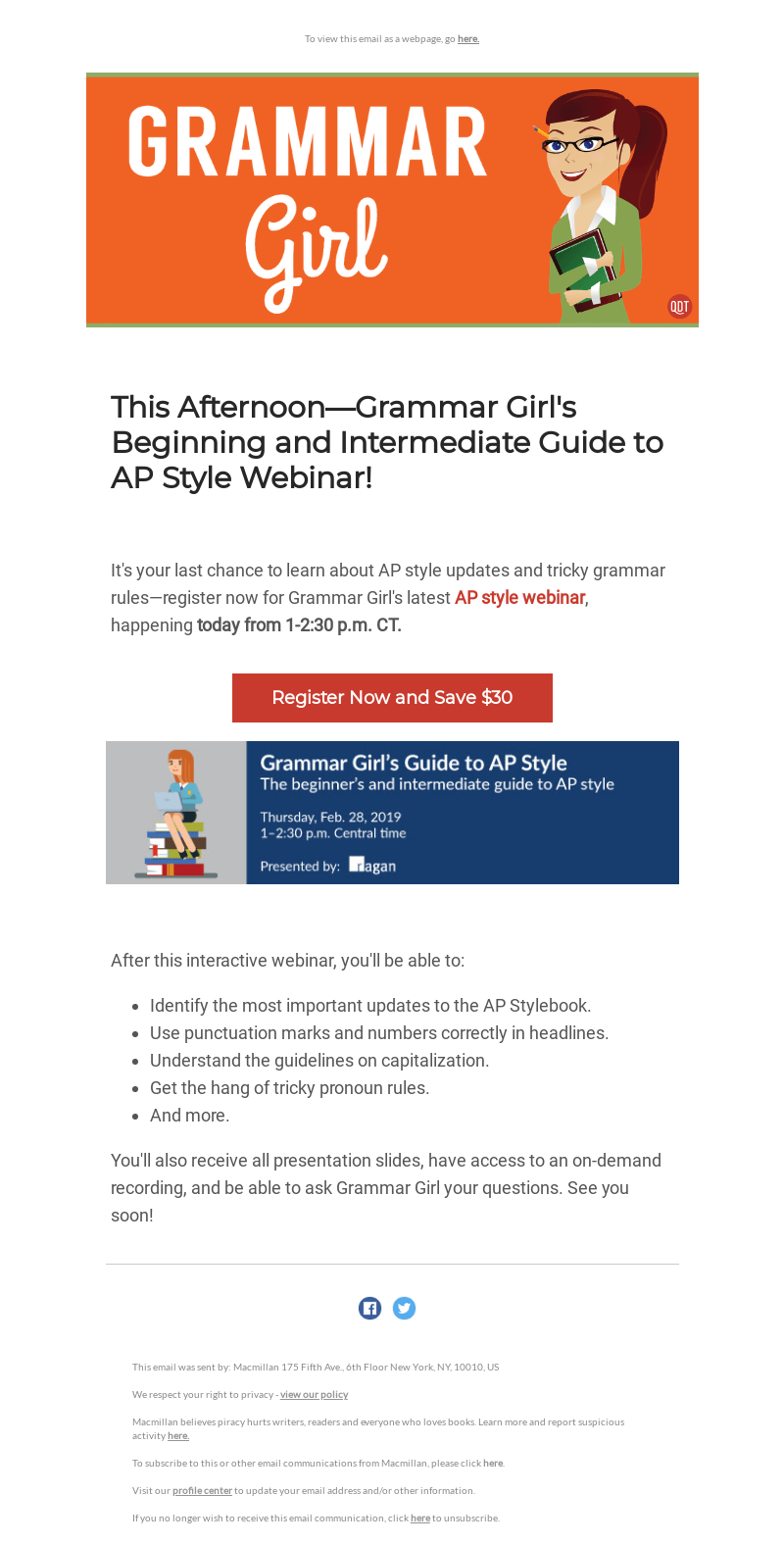
Even though people claim they do not like time pressures, last chance emails work. Such emails should be short and precise and induce a sense of urgency among the readers. Do not overuse them, however, because there can’t be too many last chances. Also, be careful not to send such emails to people who’ve already registered for your webinar, because it can stir confusion and irritation among them.
Showcase best products
Set false modesty aside and talk about your most successful products and services. Explain how they were created and what applications they found among your audience. If you create webinars, describe your most viewed and celebrated webinar, why you think that was the case and what the participants will gain if they sign up for your next event.
Collect feedback
Let your clients help you improve. The more you listen to your clients, the better experience you can provide and the more professional you will be. Collect their feedback and use it as a source of inspiration for your email campaigns, webinars and articles. Titles such as "What we learned from our clients" and "Feedback that inspired us" will definitely catch your audience’s attention.
Say thanks to speakers
Of course, it is up to you, but it is always a good idea to show appreciation to your webinar speakers by sending them a quick thank-you email. Unless you plan to sell the video afterward, you should send them a recording and ask to share it through their social media channels. This will not only help you reach out to more people but will also ensure the speakers show up for your future webinars.
Check the calendar
Take advantage of seasonal opportunities. Mark all the important and not so important holidays in the calendar and write down possible greeting emails. Of course, these should not come too often, but whenever you are out of options, a simple congratulation and a gift is a great way to connect with the audience.
Share your success
Do not be shy and share your success with the public. "This week was exhausting, but the sale was a blast," "The webinar was a resounding success", "A moment of pride: here’s a magazine article about us."
Don’t forget about reminders
Every email should include a reminder about your upcoming event. The best place for this is in a P.S. at the end, along with a link to the landing page.
You may also try to lead the client directly to the registration page, however, try to make it as organic as possible. For example, use the tricks of storytelling and talk about your former participant, let’s say, her name is Jessica, who got 520 more clients after just one webinar with you. Suggest that during the next webinar you will help the reader figure out the best way to increase their own audience. After that phrase, you can integrate the registration link in a quite natural manner.
Email campaign effectiveness
If you want your email campaign to be effective, you need to track its performance indicators such as the email open rate, link clicks, campaign costs, the number of registrations and customers, the average profit per customer, the unsubscribe rate, etc.
Even though all ideas described above have proven to be effective, you do not need to use all at once. Choose the ones which most fit your product/service as well as the target audience. Remember, your goal is not to bombard your potential clients with links and requests, but to increase sales and webinar traffic along with building trust and brand recognition.
That is why you need to measure how the campaign actually performs. It is what tells you where to improve, both in how you write and in the webinars themselves.
FAQ
What makes an email campaign truly effective?
An email campaign becomes effective when it is interesting, original and consistent, and above all when it brings in clients through a clear topic, relevant content and a strong call to action.
How can I personalize my emails to build trust?
You can personalize your emails by showing yourself or your team, using real photos, talking about typical clients and sharing honest stories about challenges you faced to create a more trustworthy and human connection.
Why should I include free perks in my email campaigns?
Including free perks such as a free book, podcast, trial lesson or webinar shows your clients that you care, shifts the focus away from just selling and helps build goodwill and engagement.
When is it appropriate to use urgency in email messages?
Using urgency is appropriate in a "last chance" email that is short, clear and pushes readers to act fast, but avoid overusing such messages, because they cause confusion and irritation.
What key metrics should I track to measure email campaign success?
You should track metrics like open rate, click-throughs, cost per campaign, number of registrations or customers, profit per customer and unsubscribe rate so you can learn what works and improve continuously.