
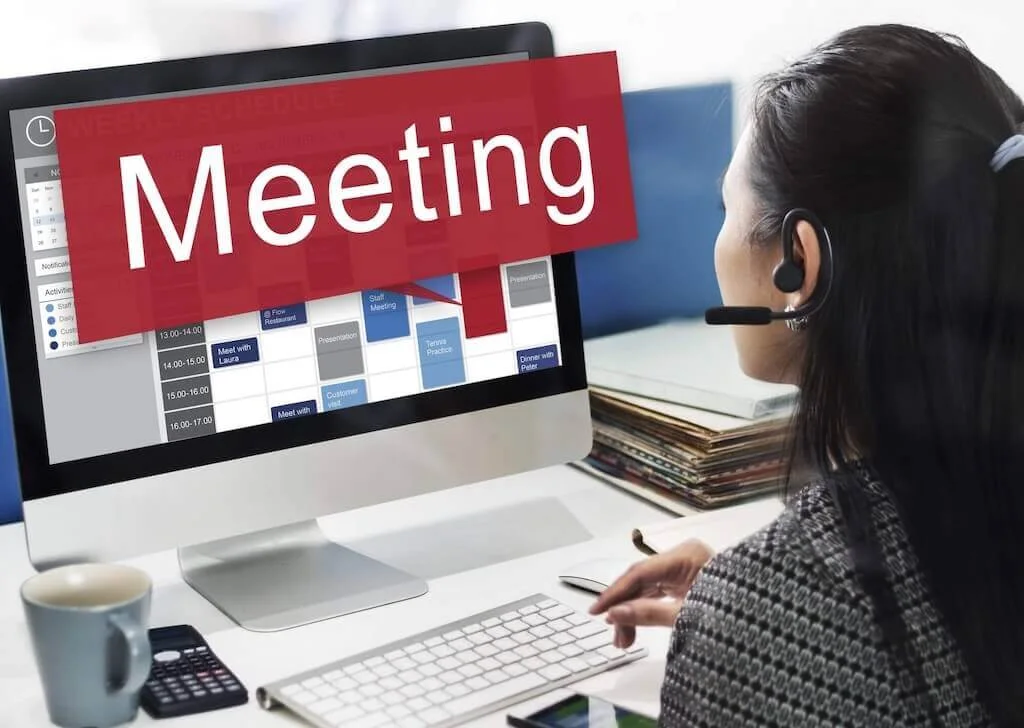
Now, since technology has completely changed our everyday lives, it is beneficial for many businesses to manage meetings online.
Essential Tools for Productive Online Meetings
With lots of companies expanding globally and offering positions in which people can work from home, it is crucial for many companies to conduct their business meetings online. These conferences allow people to meet one another when there is a long-distance separating them. These meetings also allow companies to make decisions faster.
Ready to start an online meeting? Here is how
Here are the essential tools you need to start an online meeting. If the platform itself is what you are still choosing, our comparison of seven webinar platforms puts their prices and limits side by side.
1. Platform
First, one needs to have a good platform on which they can hold their online meetings. Nowadays, you have quite a diverse choice here with a variety of features and benefits. Some may work in one case while others in other cases.
Platforms differ in what they are built for. MyOwnConference and Webex cover all the basics of running a session. Others, such as MeetingHero and Lucid Meetings, lean towards running the meeting itself productively, with task tracking and note-taking built in.
2. Equipment
Every craftsman depends on their tools, and for the organizer of a virtual event good equipment is no different. It is one of the decisive components. For the best results, use a wired internet connection.
A decent monitor, webcam, and audio equipment such as a microphone and headphones are all necessary. The room should be well-lit, as bad lighting spoils the impression significantly and impedes appropriate perception. Depending on what you intend to speak about, it may also be a good idea to have a notebook, highlighter, and pens with you so that you can take notes.
3. Agenda
Each event needs a well-thought plan or agenda. And virtual meetings are not an exception.
Before starting an online meeting, you should plan the day and exact time when your session will be held. It would be great to send your listeners messages to remind and encourage them to participate. Currently, it can be more difficult to schedule a good time for people to sit in their offices at their computers.
Plan the meeting out beforehand. The more detail you settle in advance, the less room there is for confusion later. Tell your participants how long the meeting will run. Plan each point, each issue, each solution, and expect the odd objection, because almost every meeting has one. Do that and the session runs smoothly, which is an impression people remember.
4. Efficient presentation
The presentation needs to be effective and engaging. It should capture and maintain interest in the topics discussed. Any visuals provided should be visually appealing to keep participants interested and ensure they understand the information correctly.
A slide should not carry so many words that it overwhelms the reader. Every small detail can decide the result: the colors, the arrangement of elements, the accents, the font, and the confidence with which you deliver it all.
5. Creative mindset and being ready for improvisation
Sometimes, parts of the meeting may not turn out as planned, and that is perfectly fine. This is why any meeting organizer, when starting an online meeting, should be ready to improvise. Bring freshness to your meeting. Think outside the box, and do not cling too tightly to the plan. In this case, even if the meeting will take a different route than expected, it will continue to run efficiently.
A creative approach is what keeps your participants focused and lets them take away what they came for. In addition, emotions are really essential. They’re like the pepper of the whole process. A presenter who is genuinely interested in their own subject is the only kind who engages anybody. A project delivered with burning interest will seem more appealing to the listeners than the one delivered just with a cold and too rational approach.
Online meetings are demanding, because you lose the side conversation that clears up confusion in a room. So, spend enough time on preparation. The first time you start an online meeting may be difficult and may require a lot of research. You may need to consult specialists, or simply people who have done it more often than you.
You may find a lot of issues and overcome a wide range of unanticipated obstacles. However, if you keep your purpose in view, stay positive, and bend every tool towards it, your virtual meeting is far more likely to succeed.
Summary of starting an online meeting
Rising to the challenge of truly effective online meetings requires far more than simply clicking "Start." By choosing the right platform that aligns with your meeting’s purpose, securing reliable equipment and lighting, designing a clear agenda, creating visually engaging presentation materials, and cultivating a mindset open to improvisation and genuine engagement, you set the stage for meaningful, productive interaction in a virtual world. Embracing these principles ensures that your remote gathering doesn’t just check a box but instead becomes a purposeful session that leaves participants informed, connected, and motivated to act.
FAQ
What platform should I choose to start an online meeting?
You should pick a platform that offers necessary features for your meeting type, such as screen sharing, chat, video, and recording. Some platforms focus on webinars, others on collaborative meetings. Make sure it matches your goals and technical needs.
What equipment do I need to run an online meeting smoothly?
You’ll need a reliable wired internet connection, a good webcam, microphone or headset, and proper lighting in the room. These basics make sure participants see and hear you clearly, and keep the impression professional.
How do I prepare an agenda for an online meeting?
You plan ahead every topic, allocate time for each, notify participants about duration, and send reminders. This structure helps avoid confusion and keeps the meeting focused and efficient.
What makes a presentation effective in online meetings?
An effective presentation uses clear visuals, avoids overloading slides with text, holds the audience, and keeps the information easy to follow. Visual appeal and simplicity help participants stay attentive and understand your points.
What should I do if something goes off-script during the meeting?
Stay flexible and ready to improvise. If part of the session doesn’t go as planned, adapt on the fly. Keep your energy, show genuine interest in your topic, and guide participants back on track. That helps maintain flow and positive atmosphere.