

Webinar announcements are placed on the registration pages, in social networks and emails.
Webinar announcement
A good announcement would contain major information about the webinar and answers to visitors’ possible questions concerning the upcoming event.
On top of that, such an announcement motivates users to register for the webinar. Below, 10 questions are offered that would help you prepare a quality informative announcement.
What is your webinar’s name?
Indicate the name in your webinar announcement. Read for some suggestions on inventing names for your webinars. To cut a long story short, the name should reflect the event’s essence and be catchy. To draw users’ attention, you could stress its topicality, promise some profit, and indicate the exact target audience.

When will your webinar take place?
Tell the precise date and time of the webinar. Information on the best time to hold your webinar is available here.
Note that people that visit webinars live in different cities and even countries, so be sure to include your time zone.
Who will hold the webinar?
Introduce the presenter to your potential visitors. Cover their education, experience, awards and anything else relevant. Yet, make sure not to overload your visitors with extra details and facts from the presenter’s biography. Instead, write 1 to 3 sentences only.

Add the presenter’s photo to your announcement, or a video with the person. Mostly, this will increase trust of users in the presenter personally and in the webinar in general.
What is the webinar topic?
Describe the key points in brief that will be discussed at the webinar.
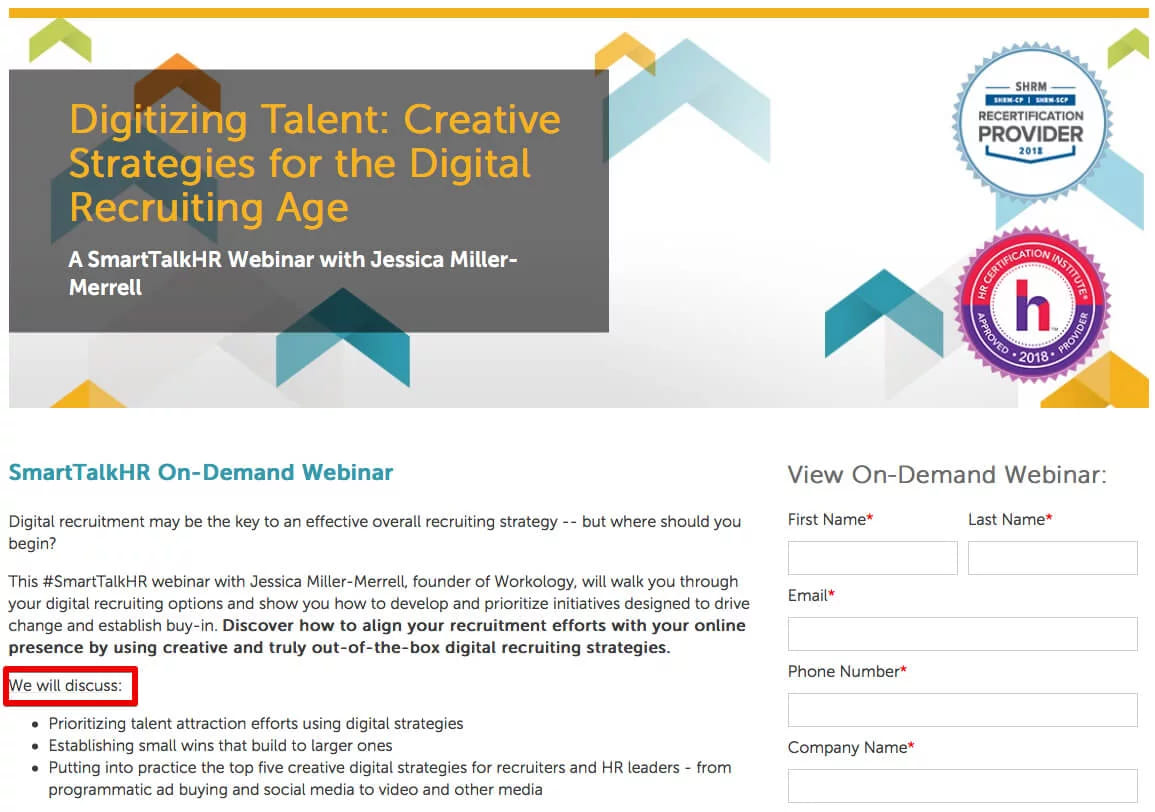
What is the target audience of the event?
Somebody who recognises themselves in the target audience keeps reading. Anybody who does not tends to leave the page.
What will attendees learn?
In your announcement, tell the audience what the webinar visitors will learn after the event is over. Here, it must touch upon the audience’s real problems and all you need is to show how your webinar would help overcome these. For instance, "you will learn how to plan your home budget and get rid of debts effectively."
What will webinar visitors get?
Indicate the profit your attendees will get from the webinar. This could include useful information, skills, additional materials, certification, etc.
Are there any reviews?
Reviews from people who attended a previous event are another way to convince somebody to register.
How much does participation cost?
Some organizers leave the price out, perhaps fearing it will look too high if the webinar is paid, or assuming it is obvious the event is free if it is not. This results in users trying to guess, which further makes them either get in touch with the organizers and learn the price or simply leave. This is why it is really necessary to indicate the participation cost.
Is there any call for action?
The announcement’s main aim is to lead users to providing their contact details and registering for the webinar. So remind them plainly of the one action standing between them and the webinar.
Final words on writing webinar announcements
When you write the announcement, make it clear what the event is about and why your audience should care. Share a compelling title, specify the date and time (including time zone), introduce the presenter with just enough detail to build trust, define the topic and target audience, outline what attendees will learn and what benefits or take-aways they’ll get, highlight any testimonials or past success stories, state the participation cost if any, and finish with a strong call to action. By covering all those elements and keeping your language direct and benefit-focused, you’ll transform a standard announcement into a persuasive message that builds anticipation and drives registrations.
FAQ
What should be included in a webinar announcement?
A webinar announcement should include the webinar topic, date and time, speaker details, registration link, and a brief description of the content.
What are some best practices for writing a webinar announcement?
Some best practices for writing a webinar announcement include using clear and concise language, focusing on the benefits to attendees, highlighting the expertise of the speaker, and including eye-catching visuals or graphics.
What is the first thing I should include in my webinar announcement?
You should include the webinar’s name so that it reflects the event’s essence and catches attention by showing topicality, promised benefit and the exact target audience.
How precise should I be when stating the date and time of the webinar?
You should tell the exact date and time including the time zone since participants may join from different cities or countries.
Why is it important to introduce the webinar presenter in the announcement?
Introducing the presenter with 1-3 sentences about their experience and adding a photo or video enhances trust in both the person and the webinar itself.
What should I explain about the webinar content to interest my audience?
You should describe what attendees will learn and the key points to be discussed so that you address real problems of the audience and show how the webinar will help.
Do I need to include a call to action and is cost information necessary?
Yes, you need a clear call to action leading users to register and you must state participation cost (even if it’s free) because leaving it out causes visitors to leave or contact you for clarification.