

Consider yourself a lifelong learner. Well, you’re in luck. The worldwide e-learning market passed $243 billion in the early 2020s and has kept climbing since.
Online learning for self-education
At no point in history were people more capable of self-education than now. Have you always wanted to learn to program? Or were you set on becoming a better writer?
Online tools for self-education
Acquiring new skills is now within reach of practically anyone with an internet connection. So you can do your online research, read and practice as much as you want. What may come as a surprise is how few people take advantage of this opportunity.
Self-education as a viable alternative to formal education
Too many people are stuck thinking you can only learn new skills through formal education. While it hasn’t been the case for years, many well-established companies still insist on hiring candidates with degrees from the right universities.
Many successful individuals are self-taught, particularly in IT and the arts. Did you know that Vincent van Gogh was primarily self-taught? He learned to draw by studying books on drawing techniques and honed his skills by meticulously copying numerous famous paintings.
Engaging in new learning experiences has been discovered to encourage brain plasticity. This refers to the brain’s ability to change throughout an individual’s lifetime.
Then, how to take advantage of these new learning experiences for self-education offered by the internet and choose the right online tool for you?
Here are five practical tools for self-education
1. Coursera
An online learning platform that offers courses, specializations, and degrees in various subjects. You can take classes from Ivy League universities like Stanford, Yale, and the University of Pennsylvania without paying $50,000 for annual tuition. The platform counts its registered users in the tens of millions and its courses in the thousands. In addition, you can search for your courses by topic or university.
You can even earn a complete master’s degree completely online. Courses are monitored by professors and include video lectures and coursework such as online quizzes, weekly assignments, and sometimes a final project or an exam.
The courses feel like interactive textbooks with their pre-recorded videos and quizzes. You also have the chance to interact with other learners and exchange ideas. After finishing a course, you will receive an official certificate for your work.
2. Project Gutenberg
A website that provides tens of thousands of free e-books. The project was started as a volunteer effort to encourage the distribution of e-books by archiving and digitizing culturally essential works. It’s an ideal online learning tool for people who prefer to learn by reading. Or if you want to supplement your video lectures with books.
You can read online or download books in multiple languages. There is a wide variety of literature available, but the focus is on older books whose copyrights have expired. The books are digitized and proofread entirely by volunteers.
Given the focus on old literature, Project Gutenberg is an ideal tool for literature students. You can find most of the classics there, starting with Beowulf. To access Project Gutenberg, no fee or registration is required. It’s enough to have your browser on a computer or mobile device to access the collection. In addition, all content on their website is free to read and redistribute.
3. Alison
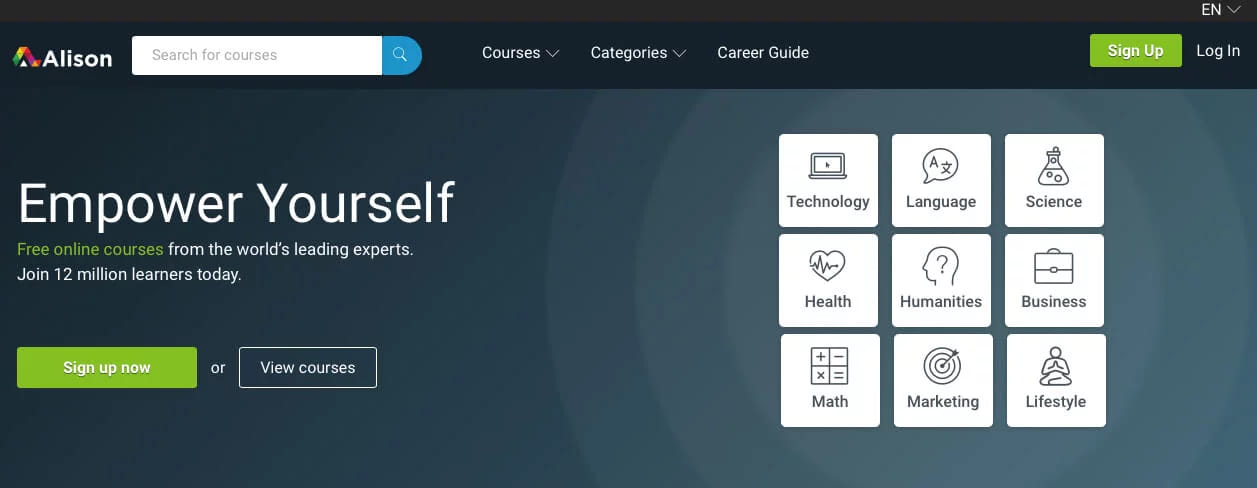
A free online learning platform for acquiring skills at a certified level. The courses come from publishers such as Cambridge University, Google, Microsoft, MIT and Macmillan. In total, over 750 certificate and diploma courses are available.
You can choose courses in various subjects, ranging from business and marketing to natural sciences, humanities, and languages. The courses usually require a passing grade of 80%.
After you complete a course, you will receive a certificate or diploma for your work. The site earns its revenue from advertising, which is how it offers every course free of charge, and charges only for certification. Certificates start in the low tens of euros and diplomas cost more.
Another downside of the Alison platform is that the courses aren’t accredited. So even if they follow industry standards, it’s up to your employer whether they recognize these certificates and diplomas or not. Nevertheless, it’s still an excellent way to gain knowledge and improve your skills, potentially boosting your career.
4. Khan Academy
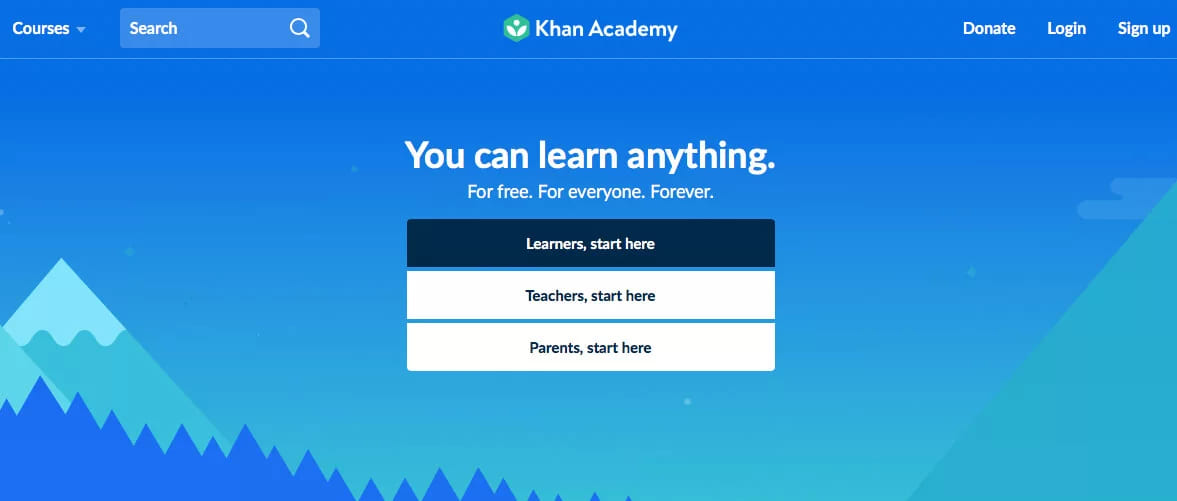
Khan Academy is a nonprofit learning platform dedicated to creating educational tools for students. Designed as a supplemental resource for classroom learning, it offers short lessons on YouTube and has tens of millions of users on its website. As a nonprofit, Khan Academy is primarily funded by donations from philanthropic organizations.
The platform covers many subjects and offers free functional video classes and interactive courses. It aims for a personalized learning experience that is built on the videos hosted by YouTube. In addition, students can track their progress and earn badges for their classes.
5. edX
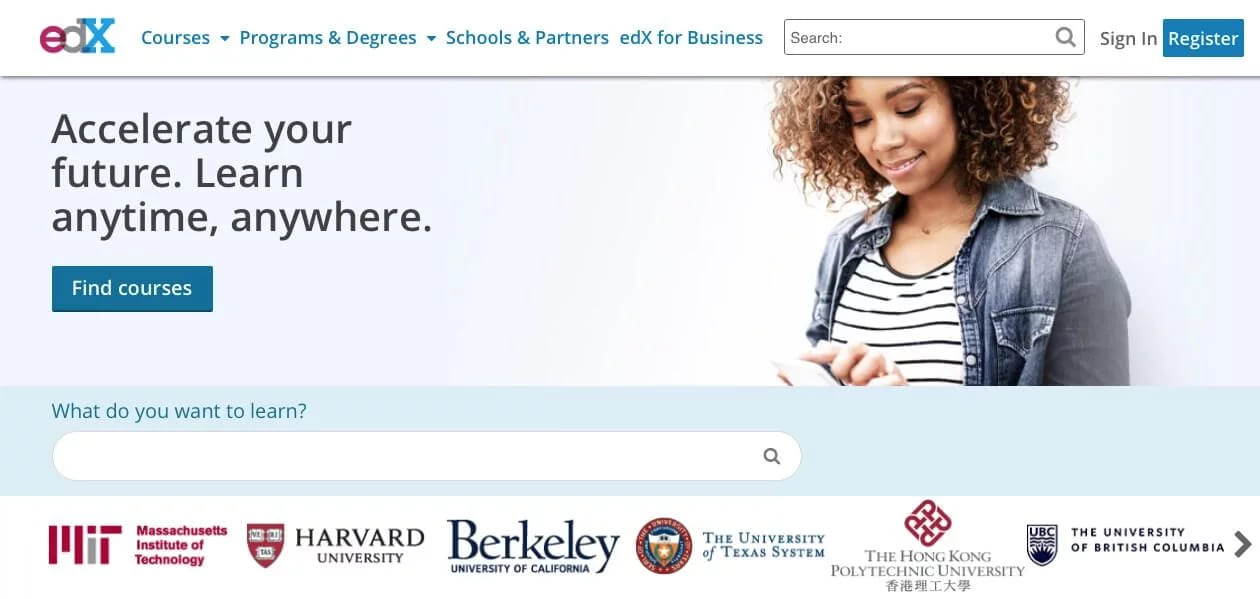
An open online course provider that offers university-level courses in a vast array of disciplines. It was created by Harvard and MIT in 2012 and now has tens of millions of users. The top academic institutions in the world have designed thousands of courses for it. Students who take these courses can also engage in virtual group discussions.
The edX platform gives you the feeling of going to university, except online. It started as a non-profit and has collaborated with dozens of schools, non-profit organizations and corporations that offer courses on the site.
The courses are offered in learning sequences, and each series consists of video classes and interactive exercises where students can practice what they have learned. After you complete a course successfully, edX offers certificates which some universities can even accept as credit.
The stereotypes related to online learning are persistent. Certificates and diplomas from these platforms are still treated either as not quite genuine or as a consolation prize for people who could not manage traditional education. There is starting to be a shift in people’s attitudes, but it takes time. Given all the benefits of self-education such as lower costs, self-paced learning, and freedom and comfort, it’s time that online education gets the reputation it deserves.
If you want to read more about online learning and self-education, you can check our earlier post about why you should study online.
Key takeaways on self-education
Between university courses, free e-book libraries, certification platforms and nonprofit video tutorials, you can assemble a path through almost any subject without enrolling anywhere. What decides whether it works is consistency. Mix the formats so you do not get bored, and treat the learning as a habit rather than a project with an end date.
FAQ
What makes self-education a good alternative to formal study?
Self-education offers the freedom to learn at your own pace, with lower cost and flexible scheduling, and it supports brain plasticity by encouraging new learning experiences.
How do tools like Coursera help with online learning?
Platforms like Coursera provide university-level courses, video lectures, quizzes, peer interaction and certificates, so you can access high-quality education without large tuition fees.
Why might someone choose the Project Gutenberg site for self-education?
Project Gutenberg offers tens of thousands of free e-books in multiple languages, making it ideal for learners who prefer reading and want to supplement or replace video lectures with texts.
What are the benefits and limitations of a free platform like Alison?
Alison gives free courses from recognized publishers, allowing you to boost knowledge and skills with certificates at low cost, but the certificates are not always formally accredited and may not be recognized by employers.
How does edX replicate a university experience online?
edX offers university-level courses designed by top institutions, with video classes, interactive exercises and certificates that in some cases can count for academic credit, giving you the feeling of being at university online.